Rice Blast: A Comprehensive Analysis of the Disease, its Impact, and Effective Management Strategies
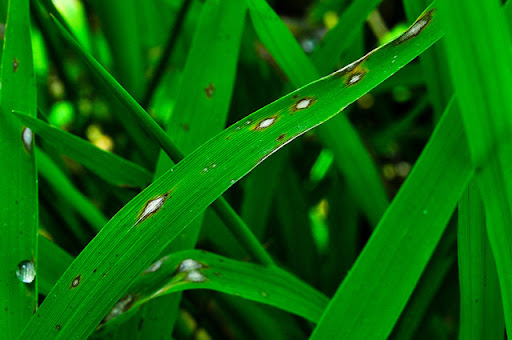
Rice blast, a disease triggered by the fungal pathogen Magnaporthe oryzae, poses a significant threat to rice crops worldwide, causing substantial damage. It is estimated that rice blast reduces global rice production by 10-30% annually, resulting in significant economic losses for farmers and food insecurity for millions of people.
Disease Overview –
Rice blast is a fungal disease that infects rice plants at various growth stages, from seedling to maturity. The disease manifests as lesions or blisters on leaves, nodes, and panicles, leading to reduced plant growth, decreased yield, and lower grain quality.
Symptoms –
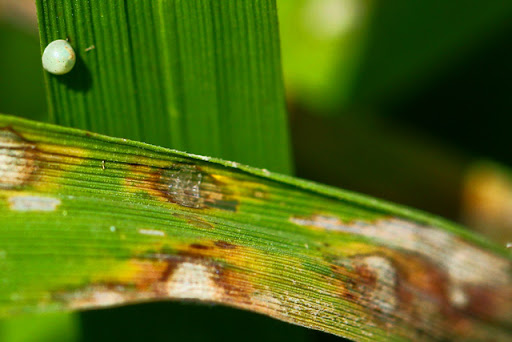
• Leaf Blast:
- Elongated or oval lesions on leaves
- Lesions often have gray centers and dark borders
- Lesions may merge to form large, irregular shapes
- Infected leaves may turn yellow or white
- Defoliation may occur in severe cases
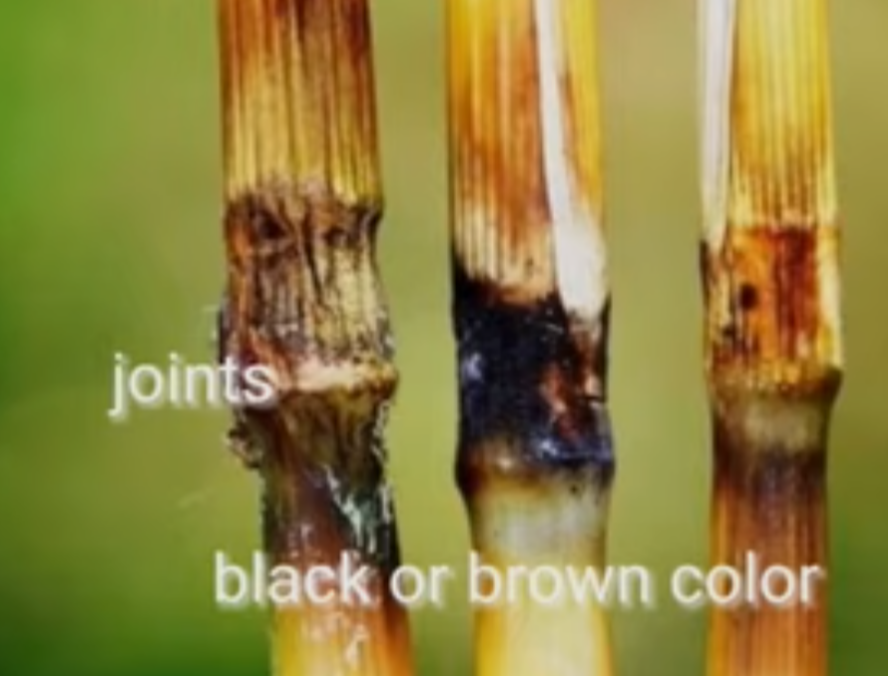
• Node Blast:
- Lesions on nodes (joints) of stems
- Inter node fragmentation, causing plant breakage
- Discoloration or swelling at infected nodes
- Reduced plant height
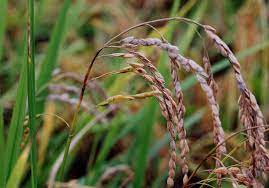
• Panicle Blast:
- Lesions on panicles (flowering branches)
- Incomplete grain filling
- Reduced grain yield
- Discoloration or deformation of grains
- Empty or partially filled panicles
• Collar Blast:
- Lesions at the collar (base of the leaf blade)
- Leaf collapse or wilting
- Reduced plant growth
• Crown Blast:
- Lesions on the crown (base of the plant)
- Plant death or severe stunting
• Other Symptoms:
- Reduced tiller of the plant
- Stunted plant growth
- Yellowing or whitening of leaves
- Increased susceptibility to other diseases
• Early Signs:
- Small, circular, grayish spots on leaves
- Fine, white, powdery growth on leaves (conidia)
• Severe Infection:
- Complete defoliation
- Plant death
- Significant yield loss
Life Cycle of the Pathogen –
Stage 1: Spore Dispersal
Conidia (spores) produced on infected rice plants or debris.
• Conidia dispersed through:
- Wind (primary method)
- Water splash
- Insects
- Human activity
Stage 2: Spore Germination
- Conidia land on rice plant surfaces.
- Conidia germinate, forming a germ tube.
- Germ tube develops into an appressorium.
Stage 3: Penetration
- The appressorium develops a penetration peg.
- The penetration peg compromises the plant cuticle and cell wall.
- Subsequently, fungal hyphae colonize the plant cells.
Stage 4: Colonization
- Hyphae spread within plant tissues.
- Fungal nutrients obtained from plant cells.
- Colonization leads to symptom development.
Stage 5: Conidiophore Formation
- Fungal hyphae differentiate into conidiophores.
- Conidiophores produce conidia.
Stage 6: Conidiation
- Conidia mature and are released.
- Conidia disperse, repeating the cycle.
Life Cycle Duration –
- Completion of life cycle: 7-14 days (optimal conditions)
- Conidiation: 2-5 days
- Germination to penetration: 2-12 hours
Key Factors Influencing Life Cycle –
- Temperature: 20-30°C (optimal)
- Humidity: >80% (optimal)
- Light: Darkness or low light favors germination
- Moisture: High moisture promotes infection
- Plant susceptibility: Rice variety and growth stage
Survival and Dispersal –
Conidia survive on:
- Infected plant debris
- Soil
- Weeds
Conidia dispersed through:
- Wind
- Water
- Insects
- Human activity
Magnaporthe oryzae, the causal fungus of rice blast, has a complex life cycle involving:
- Spore Dispersal: Wind-borne conidia infect rice plants.
- Germination: Conidia germinate, forming appressoria that penetrate plant tissues.
- Infection: Fungal hyphae colonize plant cells, causing disease symptoms.
- Spore Production: Infected plants produce conidia, perpetuating the disease cycle.
Factors Favoring Disease Development –
- Temperature: Optimal temperatures between 20-30°C.
- Humidity: High humidity (>80%) favors disease development.
- Rainfall: Excessive rainfall facilitates spore dispersal.
- Soil Moisture: Prolonged soil moisture increases infection risk.
- Cultivar Susceptibility: Some rice varieties are more prone to blast infection.
Management Strategies –
• Cultural Practices:
- Crop Rotation: Rotate rice with non-host crops to reduce inoculum.
- Sanitation: Remove infected plants and debris.
- Irrigation Management: Avoid excessive water application.
- Fertilization: Balanced fertilization to promote plant health.
• Resistant Varieties:
- Breeding Programs: Develop blast-resistant rice varieties.
- Gene Pyramiding: Combine multiple resistance genes for durable resistance.
• Chemical Control:
- Fungicides: Apply targeted fungicides during disease onset.
- Timing: Spray fungicides during early morning or late evening.
• Biological Control:
- Bio-fungicides: Utilize natural fungi or bacteria to control M. oryzae.
- Microbial Communities: Promote beneficial microbes in rice ecosystems.
• Molecular Approaches:
- Marker- Assisted Selection: Identify resistance genes for breeding.
- Genetic Engineering: Develop transgenic rice with enhanced resistance.
Conclusion –
Rice blast is a significant threat to global food security, requiring concerted efforts from researchers, policymakers, and farmers. By understanding the disease’s biology, implementing effective management strategies, and adopting integrated approaches, we can reduce the impact of rice blast and ensure sustainable rice production.